How to Diagnose Engine Misfire Before It Gets Worse
A misfire is more than an annoying vibration at a traffic light. When one or more cylinders fail to burn fuel correctly, the engine can lose power, use more fuel, damage the catalytic converter, and in some cases create a much larger repair bill. Knowing how to diagnose engine misfire helps you respond early, but a correct diagnosis depends on testing, not replacing parts based on a guess.
Modern vehicles, especially BMW, Mercedes-Benz, Audi, Porsche, and other premium cars, use closely monitored ignition, fuel, air, and engine-management systems. The warning light may tell you that a misfire occurred, but it does not automatically identify the failed component. A careful diagnostic process is what separates a quick fix from repeated, unnecessary repairs.
Start With the Symptoms and Warning Lights
An engine misfire can feel different depending on its cause and severity. You may notice a rough or uneven idle, hesitation when accelerating, poor fuel economy, reduced power, or a noticeable shaking through the steering wheel, seat, or body of the vehicle. Some misfires happen only under load, such as during hard acceleration or while climbing a hill. Others appear only when the engine is cold.
The check engine light is an important clue. A steady light commonly means the vehicle has stored a fault code and should be inspected soon. A flashing check engine light is more urgent. It can indicate an active misfire severe enough to send unburned fuel into the exhaust system, where it may overheat and damage the catalytic converter. Avoid hard driving and arrange an inspection as soon as possible.
Pay attention to when the problem occurs. A rough idle after starting may point toward ignition, vacuum, or fuel-delivery issues. A misfire only during acceleration often raises suspicion of a weak ignition coil, worn spark plug, fuel-pressure problem, or air leak. If the engine runs poorly after rain or an engine wash, moisture around ignition components may be involved.
How to Diagnose Engine Misfire Step by Step
The most reliable approach begins with a scan tool and follows the evidence. Do not start by changing every spark plug, coil, or injector. Those parts can cause misfires, but so can intake leaks, low compression, incorrect timing, wiring faults, and control-module issues.
Read Diagnostic Trouble Codes
A professional scan tool can retrieve diagnostic trouble codes and live engine data. Common generic codes include P0300 for random or multiple-cylinder misfires, plus P0301 through P0308 for a misfire identified on a specific cylinder. For example, P0304 usually indicates a misfire detected on cylinder four.
That code identifies where the engine-control module detected the problem, not necessarily why it occurred. A cylinder-specific code could be caused by a spark plug, ignition coil, injector, wiring connection, vacuum leak near that intake runner, or a mechanical fault in that cylinder. On German vehicles, manufacturer-specific codes and misfire counters often provide additional detail, including whether the problem happens at idle, under load, or after a cold start.
A technician should also check freeze-frame data. This records the engine conditions at the moment the fault was stored, such as coolant temperature, RPM, engine load, and fuel-trim readings. It is especially useful for intermittent faults that do not occur every time the vehicle is driven.
Inspect the Ignition System
Spark plugs and ignition coils are among the most common sources of engine misfires. Spark plugs wear over time, and their electrodes can become fouled by oil, fuel, or carbon deposits. An incorrect plug type or gap can also cause problems, particularly on turbocharged engines that require precise ignition performance.
Ignition coils can weaken with heat and age. A coil may work at idle but fail when cylinder pressure rises during acceleration. Where appropriate, a technician may move a suspected coil to another cylinder and see whether the misfire follows it. If the fault moves with the coil, the evidence is strong. This test must be done carefully, with the correct scan data and without creating new connection issues.
The inspection should include coil connectors, wiring harness condition, signs of oil in the spark plug wells, and damage from rodents, heat, or previous repairs. On many engines, a leaking valve cover gasket can allow oil into plug wells and create repeated ignition faults if the leak itself is not repaired.
Check Fuel Delivery and Air Leaks
A cylinder needs the correct amount of fuel and air as well as a strong spark. A restricted or leaking injector can create a lean condition in one cylinder, while excessive fuel can foul a plug and cause rough running. Fuel quality, contaminated fuel, fuel-pump performance, and fuel-pressure control can affect more than one cylinder.
Fuel-trim data helps determine whether the engine is consistently adding or removing fuel to maintain the correct air-fuel ratio. High positive fuel trims may suggest unmetered air entering the engine, low fuel pressure, or restricted injectors. Negative trims may indicate excessive fueling. These readings need to be interpreted alongside other test results, because a single number rarely provides a complete diagnosis.
Vacuum leaks are another frequent cause. Split hoses, damaged intake boots, leaking intake manifold gaskets, and faulty positive crankcase ventilation components can allow extra air into the engine. A smoke test is often the most efficient way to locate small leaks that are difficult to see during a visual inspection.
Rule Out Mechanical Problems
If ignition and fuel checks do not resolve the misfire, the engine’s mechanical condition must be tested. Low compression in one cylinder can result from a burnt valve, leaking valve seat, damaged piston, worn piston rings, head-gasket failure, or timing-related problems. These are not issues that a scan tool alone can confirm.
Compression and leak-down testing show whether the cylinder can seal and build pressure correctly. A leak-down test can help identify where pressure escapes, such as through an intake valve, exhaust valve, crankcase, or cooling system. On certain engines, inspection with a borescope may reveal cylinder-wall damage, carbon buildup, or coolant intrusion.
This stage matters because replacing coils and injectors will not fix a cylinder with a valve or compression issue. It is also where transparent diagnosis protects the customer from paying for parts that cannot solve the underlying problem.
Avoid These Common Misfire Mistakes
Clearing the check engine light without repairing the cause is not a solution. The light may stay off briefly, but the control module will store the fault again if the condition continues. Repeated misfires can also worsen carbon buildup, contaminate engine oil with fuel, and shorten catalytic-converter life.
It is equally risky to replace all coils or injectors simply because one cylinder has a misfire code. Preventive replacement can make sense when service history, mileage, and test results support it, but it should be a deliberate decision. For example, replacing a complete set of aged spark plugs is often sensible, while replacing every injector without testing may not be.
Do not ignore related symptoms such as coolant loss, oil consumption, overheating, fuel smell, or white or blue exhaust smoke. These signs can point to a deeper engine issue and change the repair priority.
When Professional Diagnostics Are the Better Choice
A basic code reader can be useful for identifying that a fault exists, but intermittent, load-related, and premium-vehicle misfires usually need more than a code check. Proper diagnosis may involve manufacturer-level scan data, oscilloscope testing, fuel-pressure measurement, smoke testing, compression testing, and software checks.
Professional help is strongly recommended when the check engine light flashes, the engine lacks significant power, the vehicle stalls, the misfire returns after plugs or coils have been replaced, or there are signs of coolant or oil consumption. It is also sensible when the vehicle has direct injection, turbocharging, complex variable-valve timing, or recent repair work that may be related to the fault.
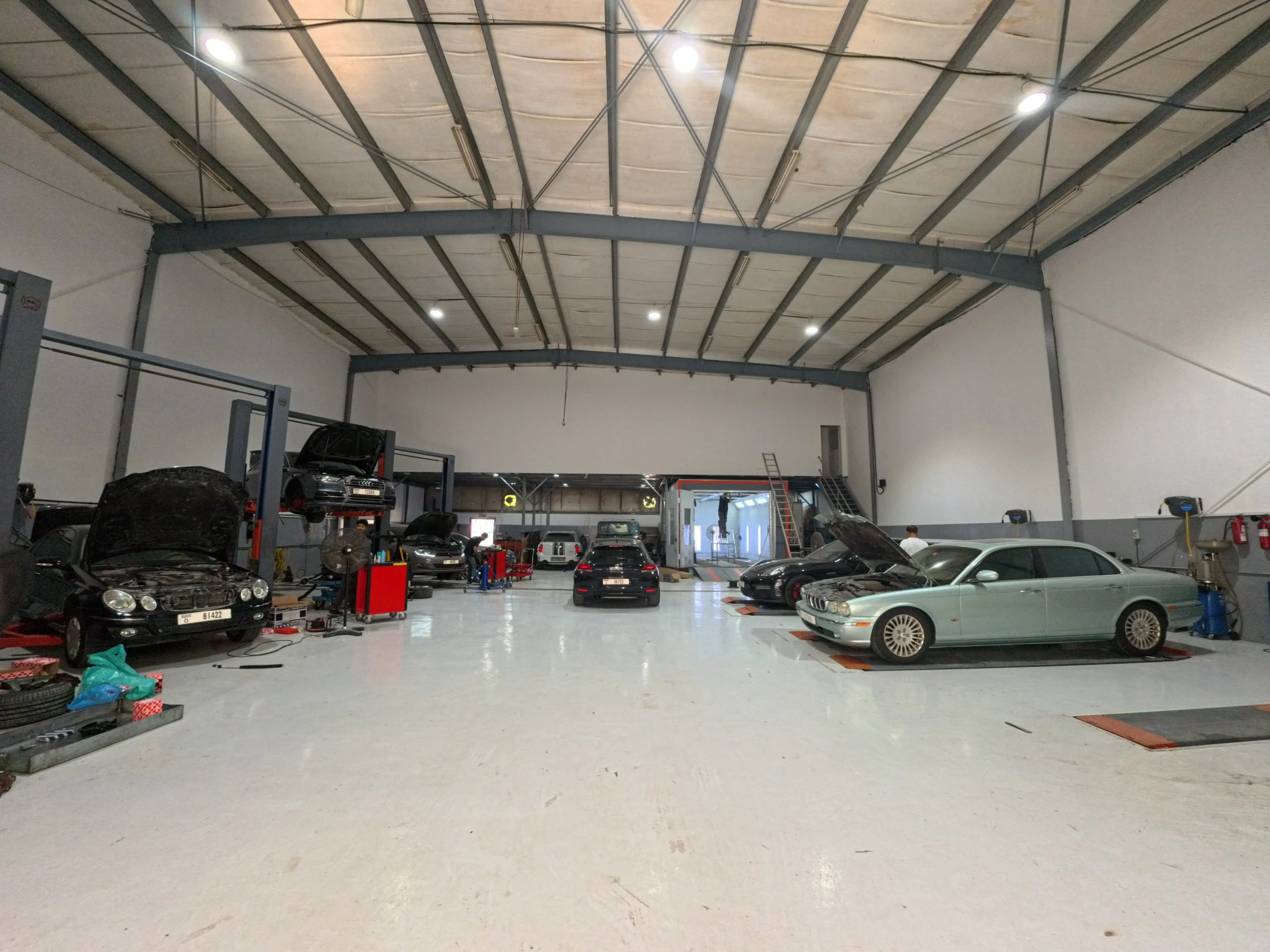
At AMA Auto, the focus is on identifying the reason for the misfire before recommending repairs. That means checking the fault data, confirming the affected system with appropriate tests, explaining the findings clearly, and providing an estimate based on what the vehicle actually needs.
A misfire rarely improves by being ignored. If your car is shaking, losing power, or showing a flashing warning light, limit unnecessary driving and have the cause tested while the evidence is still clear. Early, accurate diagnosis can be the difference between a routine repair and avoidable engine or exhaust-system damage.